 how-to
Laser Cut Key Duplication Near Me: What to Know
Table of Contents
- Laser Cut Key Duplication Near Me: What You Need to Know
- Where to Get a Laser-Cut Key Copied
- Laser-Cut Key Cost: What Drives the Price
- Laser-Cut Key Programming: Why Cutting Alone Isn't Enough
- How to Get a Duplicate Transponder Key Made
- DIY vs. Professional Laser-Cut Key Duplication: Risks to Know
- Mobile Locksmith vs. Shop Visit: Which Fits Your Situation
- Frequently Asked Questions
Last Updated: October 6, 2026
Laser Cut Key Duplication Near Me: What You Need to Know
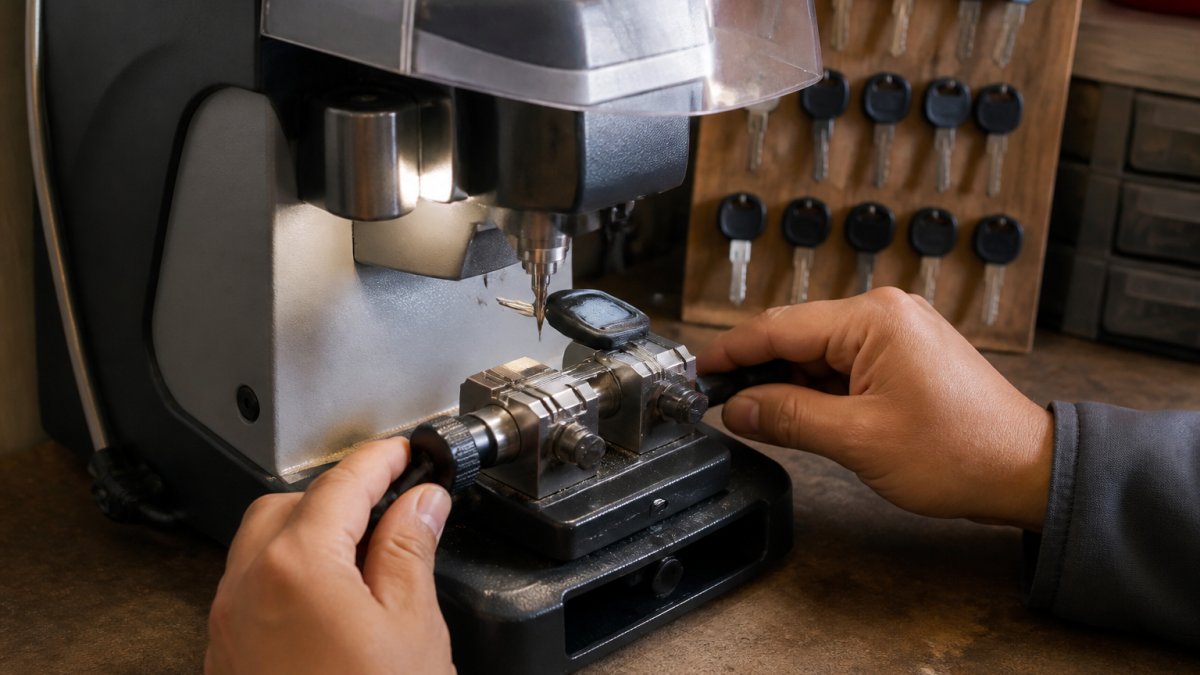
A laser cut key duplication near me search usually starts the same way: you're holding a worn key, wondering who can copy it without a dealership trip. At Mr. Key's Locksmith, we cut and program these keys.
Most hardware stores can't touch these keys, and the ones that can often can't program the chip inside them.
This guide covers how to identify a laser-cut key, where to copy one, what drives the price, and why cutting alone rarely starts your car.
How to Identify a Laser-Cut Key
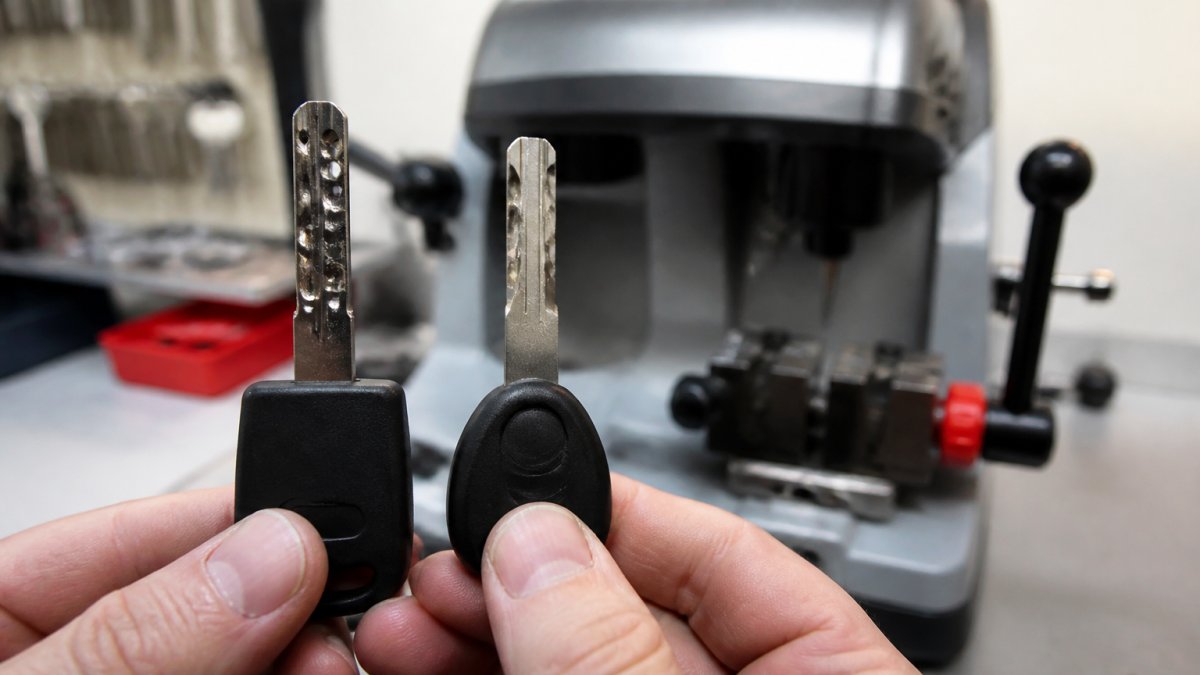
Laser-cut keys have a rectangular blade with grooves milled into the side, not the jagged edge of older keys. A flat metal rectangle with a track down one side is a sidewinder key.
Check these signs:
- The blade is thin, flat, and rectangular rather than jagged
- Grooves run lengthwise along the side, not across the top edge
- The key often has a plastic head housing a transponder chip
A common mistake is assuming any locksmith can copy these. Traditional machines cannot reproduce sidewinder grooves, you need one built for precision milling.
Laser-Cut vs. Traditional Key Blades: What's Different
Traditional keys are cut on the edge, with peaks and valleys that push lock pins into alignment. Laser-cut keys work differently: side grooves guide a high-security lock's internal wafers.
The practical differences matter when you need a duplicate:
| Feature | Traditional Key | Laser-Cut (Sidewinder) Key |
|---|---|---|
| Cutting method | Edge grinding wheel | Precision side milling |
| Groove location | Along the top edge | Along the flat side |
| Security level | Standard | High-security lock |
| Common equipment | Basic key duplicator | Laser cutting machine |
| Chip integration | Rare | Common (transponder chip) |
Most laser-cut keys also carry a transponder chip or proximity electronics, so duplication involves more than metal.
Where to Get a Laser-Cut Key Copied
Automotive locksmiths are the most reliable option for laser-cut key duplication because they handle both precision cutting and programming. Big-box retailers can sometimes cut the blade, but most can't program the chip.
Your realistic options:
- Automotive locksmiths: cut and program on site, including mobile service
- Dealerships: full OEM replacement, usually the most expensive route
- Big-box retailers: limited blade cutting, rarely programming
Big-Box Retailers vs. Automotive Locksmiths
Retail chains win on convenience and price for simple jobs, but lose on almost everything else for laser-cut keys.
An automotive locksmith carries a wider range of OEM and aftermarket blanks, plus the diagnostic tools for key synchronization, the combination that gets you a working key in one visit.
The key blank itself is often the bottleneck: a retailer might have the machine but not your specific blank.
Laser-Cut Key Cost: What Drives the Price
Laser-cut key cost depends on the key type, whether a chip or fob is involved, the vehicle make and model, and whether programming is included. Any quote that doesn't ask about your vehicle first is a guess.
Here's what moves the number up or down:
- Key type: a plain sidewinder blade costs less than a smart key or fobik
- Chip vs. no chip: transponder keys require programming time
- Vehicle: luxury and newer models often need more complex synchronization
Because pricing varies this much, we quote each job individually. Call us with your make, model, and year for a straight answer before we roll out.
Why the Same Key Costs Different Amounts at Different Shops
Two shops can quote the same vehicle hundreds of dollars apart, usually due to four hidden variables:
- Blank source. An OEM blank ordered through a dealer parts channel costs more than an aftermarket blank from a wholesale distributor. Aftermarket blanks can work fine, but compatibility varies by make and model, and some vehicles reject them outright.
- Programming method. Some vehicles accept an on-board add-a-key procedure that takes minutes. Others require an all-keys-lost reset through a diagnostic tool, which takes longer and uses more equipment.
- Mobile vs. shop overhead. A mobile unit carries fuel, travel time, and a second set of tools. That cost shows up in the quote, but it often replaces a tow bill.
- Emergency timing. After-hours, weekend, and holiday calls carry higher rates because the technician is on call. A scheduled spare during business hours is almost always cheaper.
A quote that doesn't separate the blank, the cut, and the programming is hiding where the money goes. Ask for the breakdown.
Does Insurance or Roadside Assistance Cover Key Replacement?
Most drivers don't ask this until after they've paid. The answer depends on your policy, so treat the following as a checklist for your insurer, not a guarantee.
- Comprehensive coverage. Some auto policies reimburse key replacement under comprehensive, especially when the key was lost, stolen, or damaged in a covered event. Many policies do not, and some apply it only after a deductible that can exceed the cost of the key itself.
- Roadside assistance add-ons. Programs sold through insurers or auto clubs sometimes include lockout service and, less often, key replacement. Read the benefit schedule, lockout coverage and key replacement coverage are frequently listed as separate line items.
- Extended warranties and service contracts. Some vehicle service contracts include key fob replacement as a named benefit. These are more common on newer vehicles with expensive smart keys.
Before authorizing work, call your insurer and ask: Is key replacement covered? Is there a deductible? Do I need pre-authorization or a specific receipt format? Those answers can turn a covered expense into a reimbursement.
Have your VIN ready when you call. It lets us confirm the exact key blank and programming requirements before we arrive, which cuts down on return trips.
Laser-Cut Key Programming: Why Cutting Alone Isn't Enough
Laser-cut key programming pairs a newly cut key with your vehicle's immobilizer system. Without it, the key is just shaped metal, the computer won't recognize it and the engine won't start.
Modern vehicles use a transponder chip in the key head. When you insert the key, the immobilizer reads the chip's credentials; if they don't match, the fuel and ignition systems stay locked out.
Immobilizer Systems and Transponder Chips
An immobilizer is an electronic anti-theft device that prevents the engine from starting unless it detects a correctly programmed key.
This is why a cheap copy fails. The blade fits, the chip doesn't match, and the car sits there.
Some vehicles use a proximity or smart key that communicates wirelessly. These need remote programming, and sometimes key fob programming through the vehicle's onboard module.
How to Get a Duplicate Transponder Key Made
Getting a duplicate transponder key made takes three steps: identify the key type, cut the blade, and program the chip. A qualified automotive locksmith handles all three in one appointment.
Here's the process we follow:
- Verify ownership and VIN. We confirm you're authorized to get a key for the vehicle.
- Identify the key blank. We match the correct blank to your make and model.
- Cut the blade. A precision cutting machine mills the sidewinder grooves.
- Program the transponder chip. Diagnostic tools write the key's credentials into the immobilizer system.
- Test the key. We confirm it starts the car and works in all locks before we leave.
A common mistake is ordering a key online and expecting a locksmith to "just program it." Many aftermarket keys can't be programmed if the chip isn't compatible, and some vehicles reject third-party keys entirely.
DIY vs. Professional Laser-Cut Key Duplication: Risks to Know
DIY laser-cut key duplication isn't realistic for most drivers.
The risks of going cheap:
- Unprogrammed chip: the key won't start the car
- Incorrect blank: the blade won't fit the ignition cylinder
- Damaged ignition: a poorly cut key can wear or jam the lock
On the flip side, a professional job comes with a working key, a tested result, and someone to call if something's wrong.
Insurance and warranty coverage: some auto policies and extended warranties cover key replacement, especially for newer vehicles with expensive smart keys.
Security protocols: a legitimate locksmith verifies you own the vehicle before cutting or programming a key.
Mobile Locksmith vs. Shop Visit: Which Fits Your Situation
Mobile locksmith service is better when your car won't start, you're locked out, or towing would cost more than the key. A shop visit works when you're making a spare and can drop the vehicle off.
Choose mobile service when:
- You're locked out or stranded
- Your only key is lost and the car can't be moved
- You want to avoid towing to a dealership
Choose a shop visit when:
- You're making a spare key on your schedule
- The vehicle has an ignition cylinder problem needing bench repair
- You want drop-off service for a non-urgent job
Mr. Key's Locksmith offers both: mobile service for lost key replacement and duplication, and a shop for drop-off repairs. With a former ASE certified technician on staff, we also address damaged ignition cylinders and car lock mechanisms, not just cut keys.
What to Have Ready Before the Technician Arrives
A mobile call goes faster when you gather these in advance:
- Proof of ownership. Vehicle registration, title, or a lease agreement in your name.
- Government-issued photo ID. A driver's license or state ID matching the name on the registration.
- The VIN. Usually visible through the lower corner of the windshield on the driver's side, or on the registration and insurance card.
Why Locksmiths Verify Ownership Before Cutting a Key
If a locksmith will cut and program a key for anyone who calls, that's a red flag. Key duplication is controlled because a working key plus a vehicle's location is exactly what a thief needs.
Legitimate locksmiths follow verification protocols for a few reasons:
- Fraud prevention. Verifying registration and ID confirms the person requesting the key is authorized to have it. This protects the vehicle owner as much as the locksmith.
- Liability protection. A locksmith who cuts a key for an unauthorized person can be exposed to civil liability if the vehicle is later stolen.
- Industry standards. Professional locksmith associations and state licensing bodies commonly require ownership verification as a condition of doing business. Requirements vary by state, so the exact documents requested can differ.
- Vehicle-specific safeguards. Some manufacturers require a dealer-issued key code or proof of ownership before a new key can be generated for an all-keys-lost situation.
In practice: expect to show registration and ID, and expect the technician to record the VIN and service performed. That record protects you if the key is ever misused.
If you're in the Rochester area, our mobile units cover your area. Call us with your location and vehicle details, and we'll tell you exactly when we can be there.
Frequently Asked Questions
Can a locksmith duplicate a laser-cut car key?
Yes, an automotive locksmith with a laser key cutting machine can duplicate most laser-cut car keys, including sidewinder and high-security key blades. The process requires the correct key blank and, for keys with a transponder chip or proximity fob, programming to match your vehicle's immobilizer system. Mobile locksmiths often handle both cutting and programming on-site, so you don't need to tow your car to a dealership.
Does a laser-cut car key need programming after it is cut?
It depends on the key type. A plain mechanical laser-cut key blade only needs precision cutting to work in the lock. But if your key contains a transponder chip, smart key, or proximity fob, the vehicle's immobilizer system must recognize it before the engine will start. That means laser-cut key programming is required, and it's usually done with diagnostic equipment an automotive locksmith carries on-site.
Are laser-cut keys more expensive than traditional keys?
Generally, yes. Laser-cut key cost runs higher than a basic metal key because the key blanks are vehicle-specific, the cutting requires a specialized machine, and many of these keys also include a transponder chip or remote that needs programming. Exact pricing depends on your vehicle make and model, the key type, and whether programming is included. Ask the locksmith for a quote based on your specific car.
What should I bring to get a laser-cut key duplicated?
Bring your existing working key and your vehicle. For transponder or smart keys, the car itself is needed so the new key can be programmed and synchronized to the immobilizer system. Having your VIN handy helps the locksmith confirm the correct OEM replacement or aftermarket key blank for your make and model. If you only have one key, mention that when you call so the technician arrives prepared.